A pergola earns its place in Lago Vista because summer shade is worth real money here. We are a matching service rather than a builder. Describe your patio, deck or slope, and we connect you with local outdoor-living pros who quote the work. Between a 99F design temperature, a UV index of 11 or 12 from April through August and steady wind off Lake Travis, the details of posts, spans and footings decide whether a pergola feels solid or rattles.
Why this is different here
Footing design is the first local question. Pergolas are light, partly covered and pushed hard by wind, so they are usually anchored with drilled piers or cast-in-place footings rather than sitting on a surface pad. On Lago Vista's thin Eckrant and Georgetown soils over limestone, that can mean cutting rock before anything is set. Where Houston Black clay shows up, its 0.5 to 4 inch shrink-swell cracks argue for going deeper to stable material and for connectors rated for uplift.
Then come spans. The city's own accessory structure guidance points out that pergolas need notable foundation footings and lateral support because of their shape, and that holds true in practice. Long unsupported beams, tall posts and wide bays all reduce how much wind a structure can take, so local pros size beams and select connectors for wind rather than only for looks.
Rules shape the layout too. A pergola counted as an accessory structure from 30 to 120 sq ft needs a permit and sits at least 5 feet from side and rear lot lines, while larger ones follow the principal building setbacks. If your lot runs to the lake, the 75-foot setback from the 681-foot MSL contour applies before anything is drawn. Since live oak and Ashe juniper roots spread wide, plan posts around the trees you want to keep, because the Tree Preservation Ordinance covers them.
How It Works
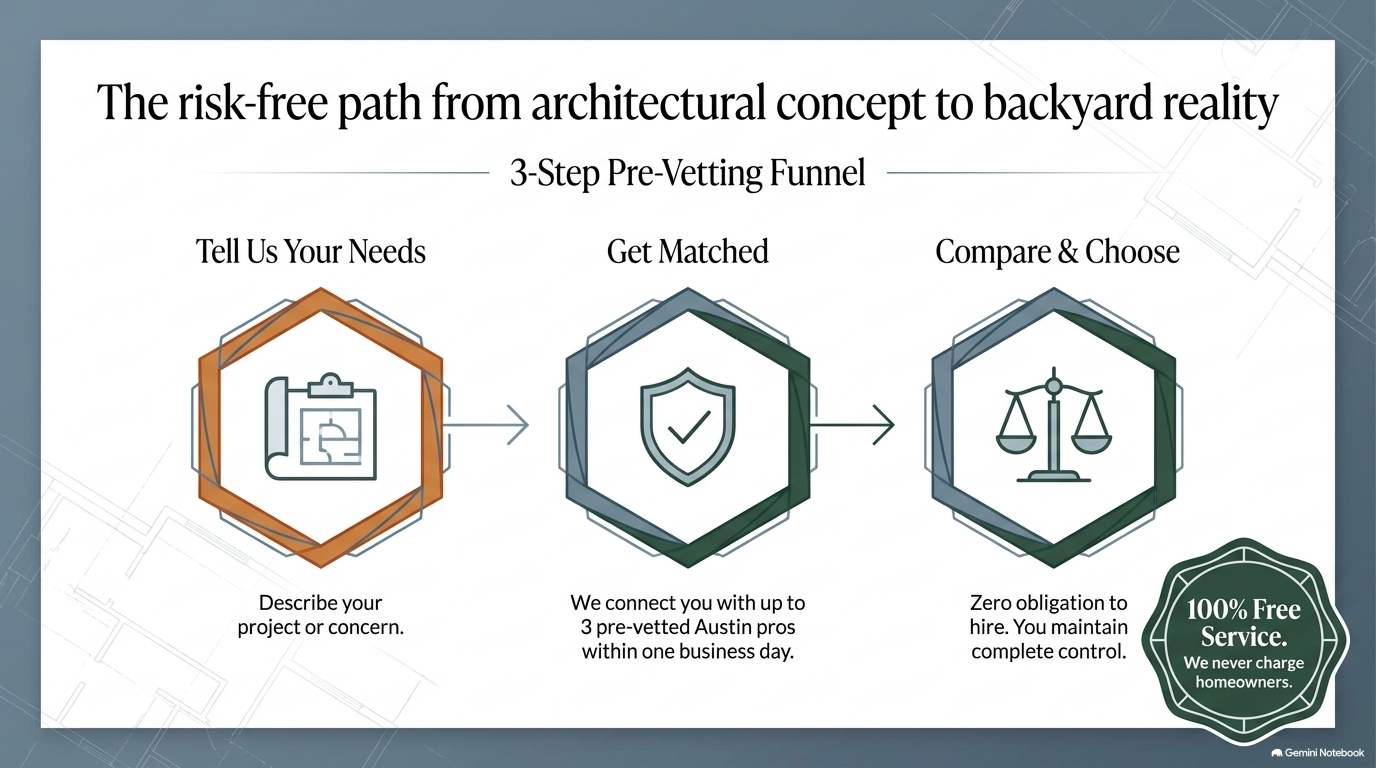
- Tell us about your pergolas and patio covers project
- Get matched with up to 3 Lago Vista pros
- Compare quotes and choose the best fit
Materials, Installation & Quality
Our matched Lago Vista pros use professional-grade materials and techniques — proper site prep, reinforcement, control joints, and curing methods that stand up to local conditions. They do not cut corners, and they do not use substandard mixes or shortcuts that lead to early failure.
Local rules and permits in Lago Vista
The rules below come from the town and county offices that issue the permits, and they change what a crew can start on and when. Ask any pro you talk to which of these applies to your lot before work begins.
Accessory Structure Permit
The City of Lago Vista Development Services office requires a permit for pergolas and other nonstandard structures, and it asks for a basic design plus detailed footing and foundation information. Structures from 30 to 120 sq ft sit at least 5 feet from side and rear lot lines, and larger ones follow the principal building setbacks. Apply through the city portal or call 512-267-5259.
Wind and Uplift Details
Lago Vista's exposed ridgelines and lakefront lots get real wind. The city's accessory structure guidance notes that pergolas need notable foundation footings and lateral support, and the adopted building code sets the wind provisions. Ask any pro you consider for footing depth, connector type and beam sizing, because those three details decide whether the structure stays put.
Tree Protection on Rocky Lots
Live oak, cedar elm and Ashe juniper roots run wide and shallow here. Lago Vista's Tree Preservation Ordinance asks that you check with Development Services before removing trees, and lot clearing needs a permit for erosion control. Footing and trench lines are best set before the layout is final, so the arborist conversation happens before the concrete does.
Shoreline Setbacks for Lakefront Pergolas
On lots that reach Lake Travis, the city measures from the 681-foot MSL contour. Single-family construction, including a pergola, sits at least 75 feet back from that line, and the Lake Travis Critical Water Quality Zone blocks most development closer in. Development Services can confirm where your contour falls before you pick a corner of the yard.
Common questions
Will a pergola survive Lago Vista wind?
It will if it is anchored for it. That means drilled or cast-in-place footings rather than surface pads, plus steel connectors rated for uplift and rafters sized for the actual span. The city's guidance on nonstandard structures calls out that pergolas need notable footings and lateral support. Ask your pro to show footing depth and connector specs.
Do I need a permit for a pergola in Lago Vista?
Yes. The City of Lago Vista lists gazebos, pergolas and similar structures as work requiring a permit, with a basic design and footing and foundation details. A pergola from 30 to 120 sq ft must sit at least 5 feet from side and rear lot lines, and larger ones follow the principal building setbacks. Call 512-267-5259 with questions.
What is the best covering for shade in this climate?
Adjustable louvers or a louvered roof give you shade in July and light in winter, which suits a place with a UV index of 11 or 12 from April through August and about 99F summer design temperatures. Fixed rafters work too but give less control. Powder-coated aluminum holds up better than bare wood against the sun and the annual rain.
Related Services in Lago Vista


Ready to find a pro in Lago Vista? Call (512) 617-1472 or fill out our contact form.